| 
On a Sunday Morning in Bukavu photographs by Lee Cantelon, c. 1994
Outside the small church the roads were clogged with Rwandan refugees, most carrying heavy burdens, the few shoddy things they could salvage from their burning villages and homes, things they desperately hoped to barter for food or shelter at the end of the exodus from the genocide that had driven them to flight. I will always remember this Sunday service. The pastor of a local church speaking bravely of redemption, forgiveness, and the hope that exists in Christ. Behind him, painted boldly on the white-washed walls of the sanctuary, was a scripture reference, 1st Corinthians, chapter one, verse eighteen. The words of this passage from Saint Paul's letter to the Corinthian church seemed most relevant.
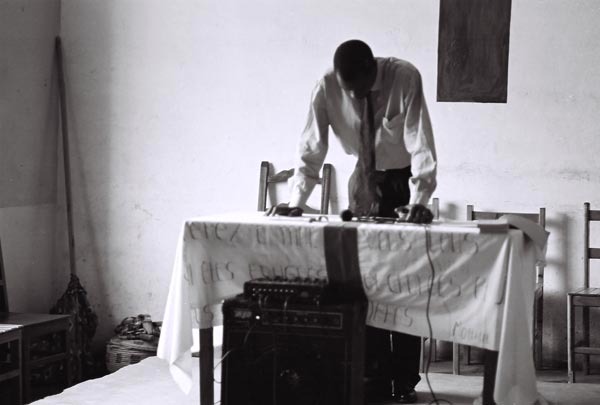
Overcome while preaching, the pastor weeps for his congregation
This message of transformation and forgiveness during a time of unimaginable bloodshed and demonic cruelty, how could it be spoken? It was, as Saint Paul had realized then, foolishness to a world of very real pain, suffering, and death. And yet, as the first believers were discovering, this message contained "the power of God."
The power of God, Jesus teaches, is the power of love. Into this maelstrom, then, the power of God, the love of God, must and could be proclaimed. The power of God to overrule the antithetical power of darkness. To hatred, the power of God preaches compassion, the ability to care for a neighbor, even outside ethnic acceptance, to see one's life in the eyes of another. To the refugees, the power of God preaches shelter. To death, the power of God preaches resurrection.
I am writing this as Easter weekend arrives, and this final aspect of God's power stands out. In Rwanda, the hopes and dreams of an entire nation were destroyed. How could one preach the cross, the sacrifice of Jesus, among so much death. Then I realize that the message is never more applicable than during such despair.
The preaching of the cross tells us that he experienced our most terrible human agony, even to death, in order to make room for the power of resurrection. The power of new life could only be drawn from the lifeless form of God's son, and in this foolish story we are informed of God's power of love to all who are in need.
L. CANTELON

  Click here to turn to Click here to turn to
Lee Cantelon's photographic journal from Rwanda
> > > Click here to go to The Words home page
|