
HOME
PAGE
DISCOVER THE WORDS
many new languages online
The Murry
READING ROOM
inspirational reading
e-BOOKS
& AUDIO FILES
the words for your
PDA, audio
narrations, music, more
WORDS
GALLERY
art that amplifies The Words

coming
soon
THE
GREEN PRESS
products to enhance your life
ABOUT
THE WORDS
an introduction to the project
LINKS
websites we suggest

contact
us by e-mail
need
technical help?
our web team is available to
assist with technical needs

published by
THE WORDS GROUP
700 Sleater-Kinney Rd SE
No. 303-B
Lacey, WA 98503

| excerpts
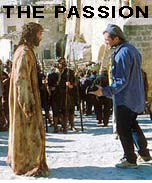
from John Meacham's Newsweek article, page two "...he (Gibson) said the wounds of Christ healed his wounds. And I think the film expresses that." - James Cazievel The country—first-century Judea, the early 21st's Israel—is part of the Roman Empire. The prefect, Pontius Pilate, is Caesar's ranking representative in the province, a place riven with fierce religious disputes. Jesus comes from Galilee, a kind of backwater; as a Jewish healer and teacher, he has attracted great notice in the years, months and days leading up to this hour. His popularity seemed to be surging among at least some of the thousands of pilgrims gathered in the city for Passover. Crowds cheered him, proclaiming him the Messiah, which to first-century Jewish ears meant he was the "king of the Jews" who heralded the coming of the Kingdom of God, a time in which the yoke of Roman rule would be thrown off, ushering in an age of light for Israel. Hungry for liberation and deliverance, some of those in the teeming city were apparently flocking to Jesus, threatening to upset the delicate balance of power in Jerusalem. The priests responsible for the Temple had an understanding with the Romans: the Jewish establishment would do what it could to keep the peace, or else Pilate would strike. And so the high priest, Caiaphas, dispatches a party to arrest Jesus. Guided by Judas, they find him in Gethsemane. In the language of the Revised Standard Version of the Bible, there is this exchange: "Whom do you seek?" Jesus asks. "Jesus of Nazareth." The answer comes quickly. "I am he." 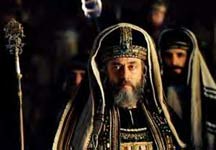 Thus
begins the final chapter of the most influential story in Western
history. For Christians, the Passion—from the Latin passus,
the word means "having suffered" or "having undergone"—is
the very heart of their faith. Down the ages, however, when read without
critical perspective and a proper sense of history, the Christian
narratives have sometimes been contorted to lay the responsibility
for Jesus' execution at the feet of the Jewish people, a contortion
that has long fueled the fires of anti-Semitism. Thus
begins the final chapter of the most influential story in Western
history. For Christians, the Passion—from the Latin passus,
the word means "having suffered" or "having undergone"—is
the very heart of their faith. Down the ages, however, when read without
critical perspective and a proper sense of history, the Christian
narratives have sometimes been contorted to lay the responsibility
for Jesus' execution at the feet of the Jewish people, a contortion
that has long fueled the fires of anti-Semitism.Into this perennially explosive debate comes a controversial movie directed by Mel Gibson, "The Passion of the Christ," a powerful and troubling work about Jesus' last hours. "The Holy Ghost was working through me on this film," Gibson has said. The movie, which was scheduled for release on Ash Wednesday, has provoked a pitched battle between those who think the film unfairly blames the Jewish people for Jesus' death and those who are instead focused on Gibson's emotional depiction of Jesus' torment. "It is as it was," the aged Pope John Paul II is said to have remarked after seeing the film, and Billy Graham was so moved by a screening that he wept. One can see why these supremely gifted pastors were impressed, for Gibson obviously reveres the Christ of faith, and much of his movie is a literal-minded rendering of the most dramatic passages scattered through the four Gospels. Gibson is an ultraconservative Roman Catholic, a traditionalist who does not acknowledge many of the reforms of the Second Vatican Council (1962-1965). He favors the Latin mass, does not eat meat on Fridays and adheres to an unusually strict interpretation of Scripture and doctrine—a hard-line creed he grew up with and rediscovered about a dozen years ago. "He began meditating on the passion and the death of Jesus," James Caviezel, the actor who plays Jesus in "The Passion," told Newsweek. "In doing so, he said the wounds of Christ healed his wounds. And I think the film expresses that."  click
on arrow to read page three
click
on arrow to read page threeback  |